
Author: Sarah Daniel
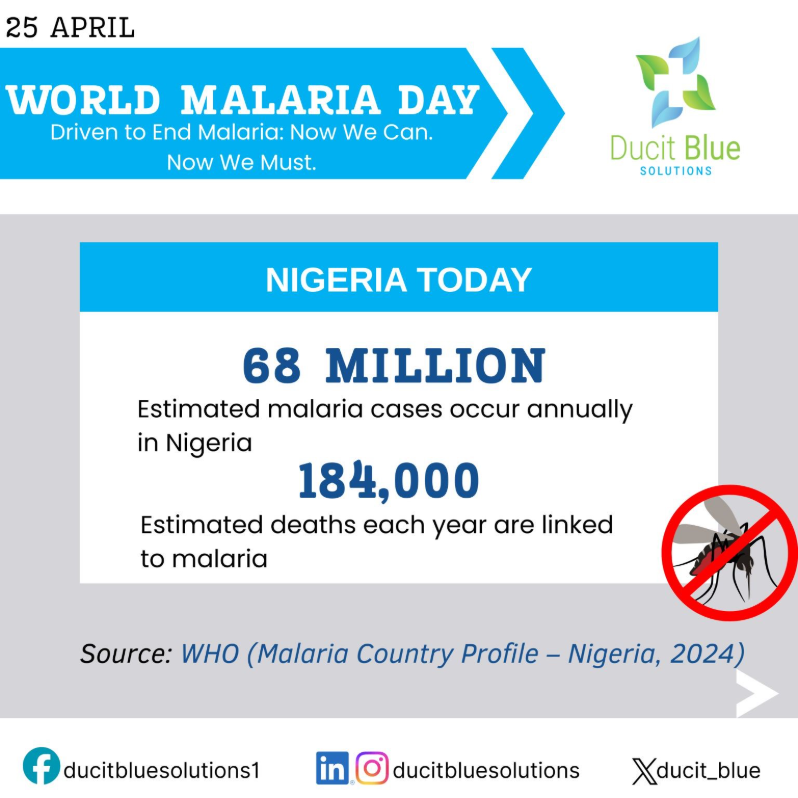
Nigeria recorded an estimated 68.5 million malaria cases in 2024 (WHO World Malaria Report 2025), accounting for nearly one in every four malaria cases worldwide. In the same year, the country contributed approximately 30.3% of global malaria deaths, with nearly 185,000 deaths attributed to the disease.1
Despite decades of intervention, billions in donor support, and sustained political commitment, Nigeria remains the country with the highest malaria burden globally in 2026, accounting for the largest share of both malaria cases and deaths worldwide.1 The question is no longer whether malaria is still a crisis in Nigeria, it is how far the country has truly come in its fight against one of its most persistent public health threats.
Beyond Deaths: The Weight of the Treatment Burden
Mortality statistics alone do not fully capture the scale of Nigeria’s malaria challenge. Every year, millions of Nigerians seek care for malaria, placing enormous strain on households and health facilities alike, while malaria remains one of the leading causes of outpatient attendance nationwide.2
National service delivery data reveal the sheer volume of malaria treatment occurring across the country. In the first three quarters of 2025, Nigeria recorded 24.47 million laboratory-confirmed malaria cases through routine health systems, while 23.85 million patients were treated with Artemisinin-based Combination Therapies (ACTs).3
These figures underscore malaria’s continued dominance as one of the most common reasons for healthcare visits in Nigeria and highlight the immense logistical burden of maintaining diagnostic and treatment supplies nationwide.
Importantly, routine facility data capture only a portion of the true burden, as many Nigerians continue to self-medicate, seek informal treatment, or remain outside formal reporting systems which is a limitation noted in the.1
A Familiar but Unequal Burden
Malaria remains endemic across nearly all parts of Nigeria, with over 90% of the population at risk.1 However, the burden is not evenly distributed. Children under five and pregnant women continue to bear the greatest risk of severe illness and death.
Malaria remains responsible for an estimated 30% of under-five mortality in Nigeria and contributes significantly to maternal anaemia, poor pregnancy outcomes, and neonatal complications.4
Beyond health outcomes, malaria continues to impose a severe socioeconomic toll through lost productivity, increased household spending on treatment, school absenteeism, and recurrent strain on health facilities.6
Have We Made Progress?
The answer is yes; but not enough.
Nigeria has made measurable gains over the past decade through expanded malaria interventions, including:
- Scale-up of long-lasting insecticide-treated nets (LLINs)
- Increased use of rapid diagnostic tests (RDTs)
- Improved access to artemisinin-based combination therapies (ACTs)
- Rollout of the R21/Matrix-M malaria vaccine in phased implementation
- Greater political advocacy through the Nigeria End Malaria Council
Some subnational success stories are emerging. Several states have reported declining prevalence rates, while pilot areas implementing integrated intervention packages have demonstrated reductions in severe malaria and malaria-related hospitalisations.8
Why Is Nigeria Still Carrying the Highest Burden?
Despite progress, several systemic challenges continue to slow the pace of reduction:
- Population Growth Outpacing Gains
Nigeria’s rapidly expanding population means that even where malaria incidence rates decline, the absolute number of cases often remains high.6
- Health System Constraints
Persistent gaps in primary healthcare infrastructure, workforce shortages, stockouts, and weak surveillance systems continue to undermine response efforts.2
- Climate and Environmental Factors
Flooding, poor sanitation, urban overcrowding, and prolonged rainy seasons sustain ideal breeding environments for mosquitoes, according to global climate-health analyses from the WHO and UNEP.
- Funding and Sustainability Concerns
Nigeria’s malaria response remains heavily donor-funded, creating vulnerabilities amid changing global financing priorities.5
- Resistance Threats
Growing insecticide resistance among mosquito vectors and emerging resistance to antimalarial medicines threaten the effectiveness of current interventions.1
The Road Ahead: From Control to Elimination
Recognising the need for more aggressive action, Nigeria is increasingly shifting its strategy from malaria control toward malaria elimination. This repositioning is reflected in the National Malaria Strategic Plan and elimination-focused policy updates by the Federal Ministry of Health and National Malaria Elimination Programme.
Where Do We Stand in 2026?
Nigeria’s malaria story in 2026 is one of significant effort, measurable progress, yet unfinished business. While intervention coverage has expanded and political commitment has strengthened, current burden levels indicate that elimination remains a long-term goal rather than an imminent reality.1
With 68.5 million estimated cases, 24.47 million confirmed cases recorded through health facilities in just nine months of 2025, and nearly 185,000 annual deaths, malaria remains one of Nigeria’s greatest public health and development challenges.3
Nigeria’s progress against malaria will continue to shape global malaria outcomes. Until the country achieves substantial reductions in both incidence and mortality, the global fight against malaria will remain incomplete.
References
- WHO World Malaria Report 2025
https://www.who.int/teams/global-malaria-programme/reports/world-malaria-report-2025 - WHO Nigeria Country Office / Nigeria Health Profile
WHO Nigeria Country Office – Nigeria Health Profile - The Guardian Nigeria – Nigeria Records Over 24 Million Malaria Cases in First Nine Months of 2025
https://guardian.ng/features/health/nigeria-records-over-24-million-malaria-cases-in-first-nine-months-of-2025/ - UNICEF Nigeria – Malaria Programme Page
UNICEF Nigeria Malaria Page - Africa Leaders Malaria Alliance (ALMA) 2025 Progress Report
https://alma2030.org/heads-of-state-and-government/african-union-malaria-progress-reports/ - World Bank Nigeria Population Data
https://data.worldbank.org/indicator/SP.POP.TOTL?locations=NG - RBM Partnership to End Malaria
https://endmalaria.org/ - Nigeria Health Watch – Malaria Intervention Updates
https://articles.nigeriahealthwatch.com/
