Author: Sarah Daniel

Introduction
Every generation of young people grows up in a world shaped by its own realities. For some, the greatest concerns may be access to education and employment; for others, economic uncertainty, social inequality, climate change, digital pressures or access to quality healthcare may define their everyday experiences. Yet, beneath these different realities lies a shared aspiration: young people want to live healthy, meaningful and fulfilling lives, with the opportunity to learn, work, lead and contribute to their communities. [1,2]
This year’s International Youth Day, commemorated on 12 August 2026, brought this shared aspiration into focus under the theme “Different Contexts, Common Aspirations.” The theme recognises that while young people experience different social, economic, and cultural realities, they share common aspirations for dignity, opportunity, participation, and a better future. [2]
One of the most important foundations for achieving these aspirations is health.
A young person cannot fully take advantage of educational opportunities, pursue a career, participate meaningfully in society or become an effective leader when their physical or mental well-being is neglected. This makes investment in youth health not simply a health-sector priority, but an investment in stronger families, communities, economies and societies. [2]
Beyond Surviving: Creating Conditions for Young People to Thrive
When we talk about youth health, the conversation often focuses on disease prevention and access to healthcare. These remain important, but the well-being of young people is much broader.
Health encompasses physical, mental and social well-being. It includes having access to nutritious food, opportunities for physical activity, safe environments, quality healthcare, accurate health information, supportive relationships and spaces where young people can express themselves without fear of stigma or discrimination. [3,4]
Mental health, in particular, deserves greater attention. According to the World Health Organization (WHO), 2025 one in seven adolescents aged 10–19 years experiences a mental health condition globally. Depression, anxiety and behavioural disorders are among the leading causes of illness and disability among adolescents. [4]
These figures remind us that being young does not automatically mean being free from health challenges.
Academic expectations, unemployment, financial pressures, social-media comparisons, relationship challenges, discrimination, uncertainty about the future and other pressures can affect young people’s mental and emotional well-being. At the same time, many young people who need support do not receive it. [3]
Creating a healthier future therefore requires us to move beyond asking young people to simply “be resilient.” We must also create environments that make resilience possible; through supportive families and communities, responsive health systems, safe schools and workplaces, meaningful opportunities and accessible mental health support. [3]
Healthy youth communities should promote:
- Physical well-being through healthy nutrition, physical activity, preventive care, and access to appropriate health services. [3,5]
- Mental and emotional well-being through supportive relationships, mental health awareness, early intervention, and reduced stigma. [4]
- Healthy decision-making by ensuring that young people have access to accurate, understandable health information.
- Digital well-being by helping young people navigate social media, misinformation and the pressures associated with digital spaces. [4]
- Sexual and reproductive health through age-appropriate information and access to appropriate services. [3]
- Safe and healthy environments that protect young people from violence, harmful substances, discrimination and other risks. [3]
- Meaningful participation by ensuring young people have opportunities to influence the decisions and policies that affect their lives. [2]
The WHO emphasises the importance of addressing mental health, preventing violence and harmful behaviours, promoting healthy lifestyles and ensuring that adolescents have access to appropriate health services. [3]
This is why youth well-being should not be viewed as a separate issue from education, employment, leadership or development. A healthy young population is better positioned to become an educated, productive and engaged population. [3]
From Health Recipients to Health Changemakers
Young people should not only be viewed as beneficiaries of health programmes. They are also important partners, advocates, innovators and decision-makers. [1]
Across communities, young people are already using their voices and skills to raise awareness, challenge misinformation, promote healthy behaviours and advocate for better policies. [1]
This is particularly important in tackling public-health challenges that require behavioural and societal change, including antimicrobial resistance (AMR). [8]
Antimicrobial Resistance (AMR) occurs when microorganisms such as bacteria, viruses, fungi and parasites change over time and no longer respond to medicines, making infections more difficult to treat. Inappropriate and excessive use of antimicrobials contributes to the development and spread of resistance, while resistant organisms can circulate among people, animals, food systems and the environment. [13,14]
The scale of the challenge is significant. A major global analysis estimated that bacterial AMR was directly attributable to approximately 1.27 million deaths in 2019 and associated with approximately 4.95 million deaths overall. The burden is particularly significant in low- and middle-income settings. [8]
Young people have an important role to play in addressing this challenge. They interact with health systems, medicines, communities and digital information environments every day and can influence behaviours among their peers, families and wider communities. Youth engagement can therefore complement technical interventions by helping to translate AMR knowledge into everyday action. [14,12]
Ducit Blue Foundation’s Commitment: Investing in Young People
At Ducit Blue Foundation (DBF), the belief that young people are essential partners in building healthier communities is reflected in the Foundation’s work to develop capacity and empower young people across Africa.
According to the Ducit Blue Foundation, its work includes capacity empowerment, strategies for combating antimicrobial resistance, research and development, youth productivity, decision-making and advocacy. [7]
A key component of this work is the AMR One-Health Pan-African Internship and Mentorship Programme, which equips young One Health professionals with knowledge, skills and networks to contribute to tackling antimicrobial resistance across Africa. The programme brings together young people from different disciplines, reflecting the interconnected nature of the One Health approach. [10]
Through its internship and mentorship programmes, DBF provides opportunities for young people to participate in technical learning, leadership development, research, advocacy, collaborative projects and professional networking. [10]
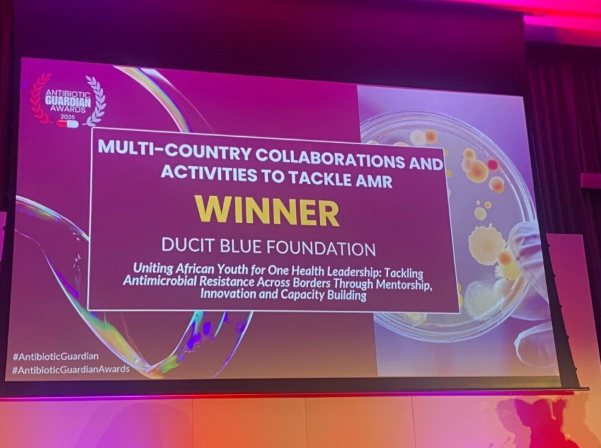
DBF’s youth-focused work has also received international recognition. Its AMR One Health Pan-African Internship and Mentorship Programme won the Multi-Country Collaboration Category at the 2025 Antibiotic Guardian Awards, recognising its contribution to youth leadership, mentorship, innovation and capacity building in the fight against antimicrobial resistance. [11]
From Participation to Action: Creating Spaces for Young One Health Leaders
Meaningful youth participation in health goes beyond inviting young people to attend programmes, receive information or speak at events. It means creating opportunities for them to apply knowledge, test ideas, make decisions, learn from experience and contribute to solutions. When young people are given this kind of space, health programmes can become platforms not only for awareness, but also for leadership and practical skill development. [1,3]
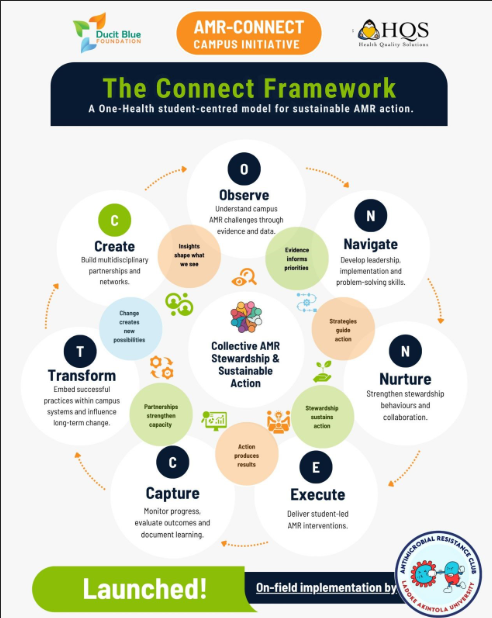
The AMR-Connect Campus Initiative provides one example of this approach in action. Led by Ducit Blue Foundation in collaboration with Health Quality Solutions, the initiative was designed as a student-led movement for sustainable antimicrobial resistance action through a One Health approach. Students from diverse disciplines were brought together to build multidisciplinary partnerships and engage change-enablers within their campus communities. [15]
Rather than providing students with a predetermined solution, the initiative is structured around a nine-month CONNECT Framework (Create, Observe, Navigate, Nurture, Execute, Capture and Transform) through which participants move from understanding AMR challenges within their campus environment towards implementing measurable actions and embedding sustainable change. The approach reflects a broader understanding of youth leadership: young people learn not only by being taught, but by being trusted to engage with real problems and work through them. [9]
That principle became particularly visible during the initiative’s engagement with the AMR Club at Ladoke Akintola University of Technology (LAUTECH). In the first phase, the student team stepped into the campus environment to understand where and how AMR risks might emerge through everyday activities. They mapped 18 sites and successfully located 13, while encountering different levels of stakeholder engagement, changed site conditions and locations that could not be accessed. [15]
A similar approach was demonstrated during WAAW 2025 at the University of Nigeria, Nsukka (UNN), where the AMR Club, with support from the South Centre and collaboration with Ducit Blue Foundation, conducted participatory AMR risk mapping across the campus. Students identified 74 AMR risk points across five thematic areas (water, waste, food, medicines, and animals/insects) and captured 44 photographs documenting the risks and potential solutions. [16]
The students subsequently transformed these findings into a physical mural, digital exhibit, awareness activities and a campus rally. The mural unveiling attracted more than 60 participants, while approximately 56 – 58 commitments were recorded on the commitment wall, encouraging members of the university community to take action towards responsible antimicrobial use. [16]
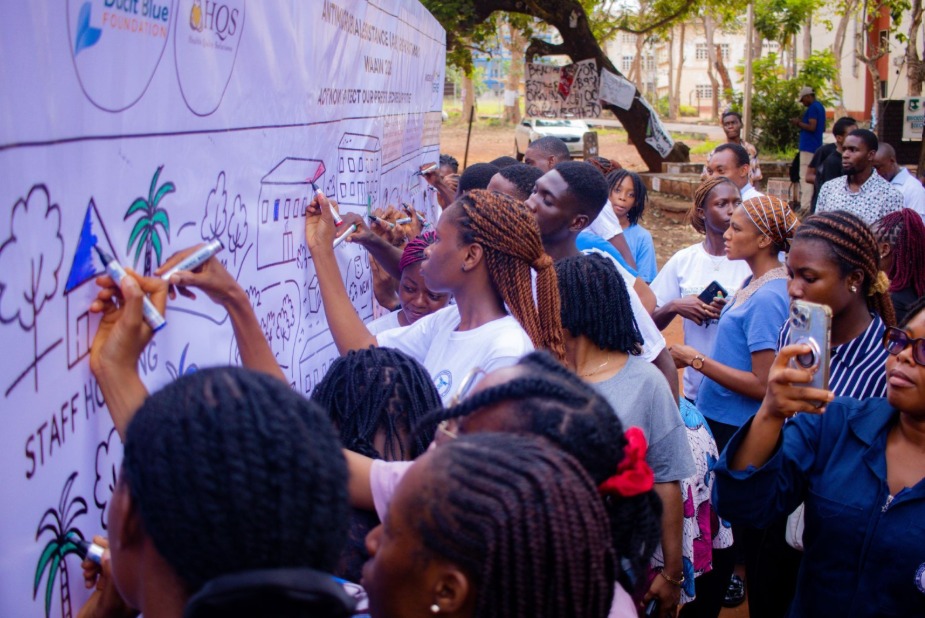
Together, the LAUTECH and UNN experiences illustrate two complementary dimensions of youth leadership in public health. At LAUTECH, students were supported to lead field implementation, make decisions and learn through reflection; at UNN, students used participatory mapping and creative communication to identify risks, generate evidence and mobilise awareness and action. Both demonstrate the value of giving young people the structure, mentorship and ownership required to move from being recipients of health information to active contributors to health solutions. [15,16]
Building a Pipeline of Young Health Leaders
The LAUTECH and UNN experiences is part of a broader effort by Ducit Blue Foundation to create pathways for young people to engage with public-health challenges and develop the capacity to lead change.
DBF’s work in youth development extends across capacity building, research, advocacy, youth productivity and antimicrobial resistance. Its approach recognises that addressing complex health challenges requires not only technical expertise, but also a generation of young professionals who are equipped to collaborate, communicate evidence and participate meaningfully in decision-making. [7]
This thinking is also reflected in the AMR One-Health Pan-African Internship and Mentorship Programme, which provides young professionals with opportunities to deepen their understanding of antimicrobial resistance, develop professional and research skills, work across disciplines and engage with mentors and peers from different African countries. [10]
The programme engaged 76 interns, 54 mentors and 59 facilitators from 20 African countries, across four (4) cohorts, demonstrating the potential of youth-focused capacity development to create cross-country networks of young health professionals. The fourth cohort was done in collaboration with the One Health Society (OHS), Tanzania. [7]
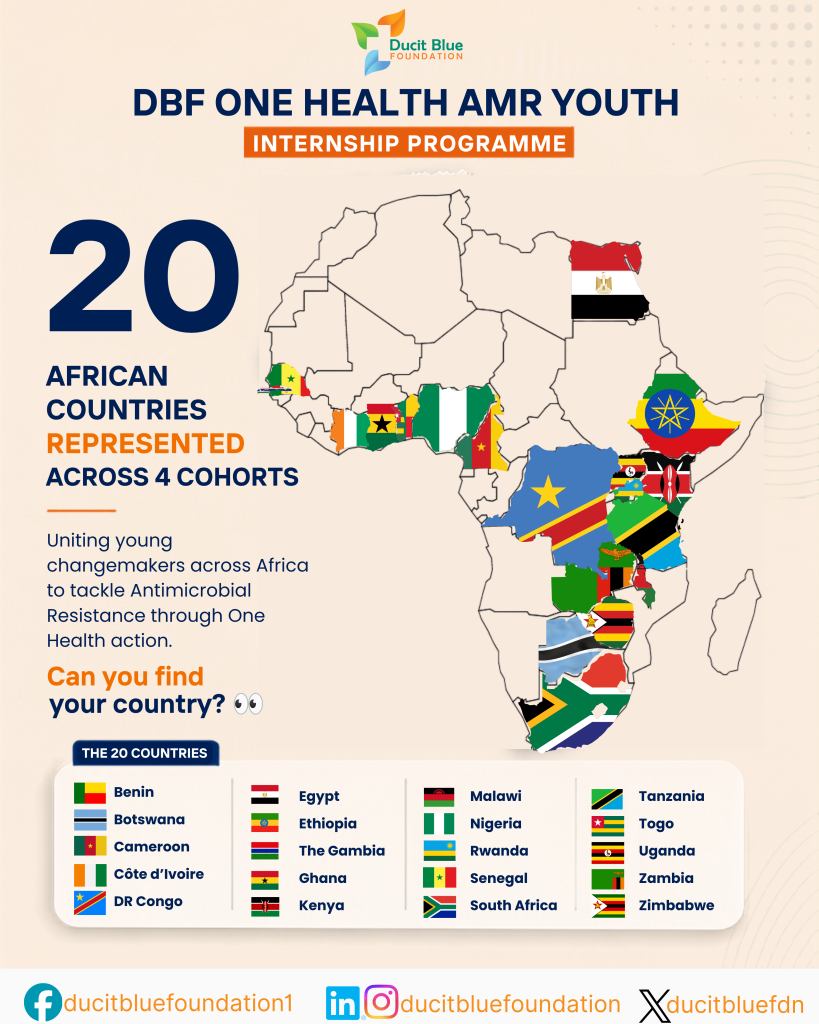
The value of such programmes is that they create a progression from learning to participation, and from participation to leadership. A young person may begin by learning about AMR, progress to discussing the issue with peers, then become involved in research or advocacy, and eventually contribute to the design or implementation of solutions. The aim is not simply to create knowledgeable young people, but young people who can put that knowledge to work. [3,10]
Evidence emerging from DBF’s youth-focused programmes illustrates this potential. A 2026 study published in BMC Medical Education examined the integration of AMR into pre-service pharmacy training curricula at five selected universities in Nigeria, Kenya and Ghana. The study emerged from the 2020 – 2021 One Health Pan-African Internship Program organised by DBF in collaboration with the African Regional Office of the International Pharmaceutical Students Federation. [8]
The study identified gaps in the integration of AMR competencies, including areas such as infection prevention and control, diagnostic stewardship and surveillance. Beyond its findings, however, the work demonstrates what can happen when young professionals are given opportunities to move beyond receiving knowledge and into generating evidence that can inform education and practice. [8]
Taken together, initiatives such as AMR-Connect Campus and the One Health Pan-African Internship and Mentorship Programme point towards a broader model of youth engagement: build capacity, provide mentorship, create opportunities for practical application, allow young people to lead, and learn from the evidence they generate. [9,10]
This is particularly relevant to the theme of International Youth Day 2026. If young people across different contexts share common aspirations for health, opportunity, dignity and meaningful participation, then creating pathways for them to participate in solving health challenges is one way of turning those shared aspirations into action. [1,2]
As we reflect on International Youth Day 2026, initiatives such as AMR Campus Connect with the AMR Club LAUTECH remind us that investing in young people does not always require creating something entirely new. Sometimes, it means recognising the passion and potential that already exist among young people and providing them with the knowledge, mentorship, platforms and opportunities to turn that potential into action. [9]
Ducit Blue Foundation’s Take
At Ducit Blue Foundation, we believe that young people should be recognised not merely as beneficiaries of health interventions, but as partners and leaders in creating healthier communities.
Our commitment to youth empowerment is reflected in our work to build capacity, strengthen knowledge, support research and create opportunities for young people to participate in health advocacy and decision-making. Through youth-focused initiatives; including the AMR One-Health Pan-African Internship and Mentorship Programme and AMR Campus Connect with the AMR Club LAUTECH, we continue to support young people with the knowledge, skills and platforms to contribute meaningfully to public health.
This investment in young people also creates an important pathway towards succession planning in public health. By equipping emerging professionals and student leaders with practical experience, leadership skills and opportunities to take ownership of health initiatives, these programmes help nurture the next generation of professionals who can sustain and advance the work of addressing complex health challenges, including antimicrobial resistance.
This forward-looking approach is further strengthened through DBF’s partnership with EcoMed Nexus Foundation, which seeks to advance community-based AMR prevention and environmental health interventions through a One Health approach. The partnership brings together community action, behaviour change, operational research, policy expertise and capacity building, creating additional opportunities for emerging health actors to gain practical experience and contribute to sustainable solutions.
References
- United Nations. International Youth Day 2026: Different Contexts, Common Aspirations. United Nations, 2026. United Nations.
- United Nations Department of Economic and Social Affairs. 2026 International Youth Day. 12 August 2026. United Nations Department of Economic and Social Affairs.
- World Health Organization. Promoting adolescent well-being. WHO. World Health Organization.
- World Health Organization. Adolescent mental health. 2025. WHO Fact Sheet: Adolescent Mental Health.
- World Health Organization. Physical activity. WHO. World Health Organization.
- Health Quality Solutions. Coaching Students to Run Antimicrobial Resistance Fieldwork. LinkedIn, 2026. Health Quality Solutions LinkedIn post
- Ducit Blue Foundation. What We Do. Ducit Blue Foundation: What We Do.
- BMC Medical Education. Assessing antimicrobial resistance inclusion in pre-service pharmacy training curricula of five selected sub-Saharan African universities. 2026. Full research article.
- Ducit Blue Foundation. AMR-Connect Campus Initiative officially launched: A student-led movement for sustainable AMR action through a One Health approach. LinkedIn, 2026. DBF LinkedIn post.
- Ducit Blue Foundation. Our Internship Programmes. Ducit Blue Foundation: Internship Programmes
- Ducit Blue Foundation. 2025 Antibiotic Guardian Awards: Multi-Country Collaboration Category. Ducit Blue Foundation: 2025 Antibiotic Guardian Awards.
- World Health Organization Regional Office for Europe. Action against antimicrobial resistance requires a One Health approach. 16 April 2024. One Health Approach
- World Health Organization. One Health. 8 May 2026. WHO One Health fact sheet
- World Health Organization. Our work: Antimicrobial resistance. World Health Organization
- Ducit Blue Foundation. Phase 1 of the AMR-Connect Campus Initiative: AMR Club LAUTECH fieldwork and reflection. LinkedIn, 2026. DBF LinkedIn post
- Ducit Blue Foundation. AMR-Connect: AMR Club UNN’s World Antimicrobial Awareness Week (WAAW) 2025 activities. LinkedIn, 2025. DBF LinkedIn post