
Author: Sarah Daniel
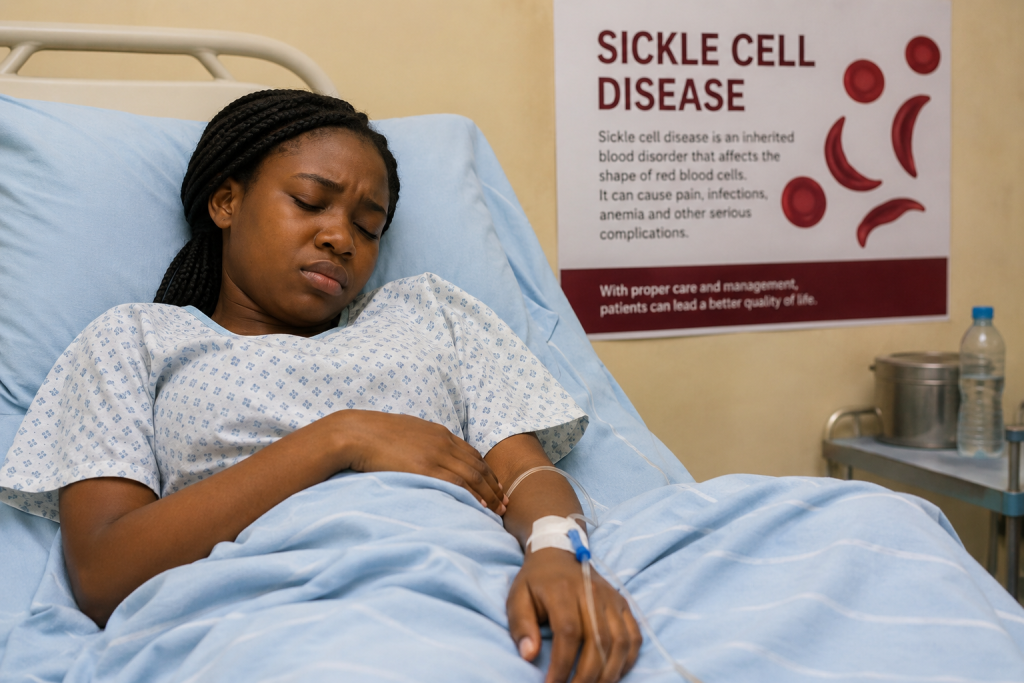
For decades, efforts to address sickle cell disease (SCD) in Nigeria has centred on survival; preventing childhood deaths, managing painful crises, and reducing life-threatening complications. While these goals remain critical, a new question is gaining urgency: What does it mean to live well with sickle cell disease?
Quality of life extends beyond survival. It includes physical health, mental wellbeing, access to education and employment, social inclusion, financial security, and the ability to participate fully in society. For millions of Nigerians affected by SCD, improving quality of life requires a shift from emergency care, to comprehensive, continuous support.[1]
Understanding Sickle Cell Disease
Sickle cell disease (SCD) is a group of inherited blood disorders characterised by the presence of abnormal haemoglobin, known as haemoglobin S (HbS).[3] The condition is passed from parents to children when both parents carry the sickle cell trait.
Under normal conditions, red blood cells are round and flexible, allowing them to move easily through blood vessels and deliver oxygen throughout the body. In people living with SCD, red blood cells can become hard, sticky, and crescent- or sickle-shaped, particularly when oxygen levels are low.[3]
These misshapen cells can block blood flow, reducing oxygen delivery to tissues and organs, and causing recurrent episodes of severe pain, known as vaso-occlusive crises. Over time, repeated blockages and chronic anaemia (a condition in which the body does not have enough healthy red blood cells to carry adequate oxygen to its tissues) can lead to serious complications, including infections, stroke, organ damage, delayed growth, and reduced quality of life.[1,3]
Although there is currently no widely accessible cure for SCD in Nigeria, early diagnosis, preventive care, comprehensive treatment, and psychosocial support can enable people living with the condition to lead longer, healthier, and more productive lives.[1,3]
Nigeria’s Sickle Cell Burden
Nigeria carries the highest burden of sickle cell disease (SCD) in the world.[1,2] An estimated 150,000 babies are born with SCD in the country every year,[7] accounting for approximately 29% of all global births affected by the disease.[2,3]
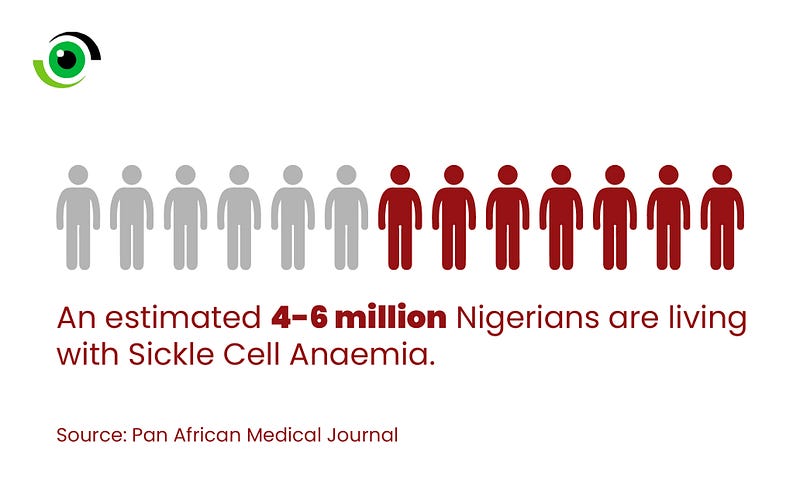
Between 20% and 30% of Nigerians are carriers of the sickle cell trait (HbAS), while approximately 2-3% of the population lives with the disease.[1] Based on current population estimates, this translates to approximately 4-6 million Nigerians living with SCD.[1,4]
SCD remains a major contributor to child mortality. Without early diagnosis and appropriate care, between 50% and 90% of children born with SCD in sub-Saharan Africa die before their fifth birthday.[3] However, evidence shows that early detection through newborn screening, comprehensive care, and access to effective treatments can significantly improve survival and quality of life.[1,3,5]
Beyond Pain Crises: The Everyday Reality of Living with SCD
Although recurrent pain episodes are the most recognised feature of SCD, the disease affects nearly every aspect of a person’s life.[1]
People living with SCD often experience chronic anaemia, fatigue, recurrent infections, delayed growth, stroke, kidney disease, and other organ complications.[1] Frequent hospital visits and unpredictable health crises can disrupt education, employment, family life, and social relationships.
The psychosocial burden is equally significant. Studies have found that people living with SCD experience higher rates of anxiety, depression, sleep disturbances, and social isolation than the general population.[5] In Nigeria, stigma and misconceptions about the condition continue to affect employment opportunities, relationships, and self-esteem.
The Financial Cost of Survival
Managing SCD is expensive, particularly in a health system where out-of-pocket expenditure accounts for more than 70% of total health spending.[6]
The cost of medications, laboratory tests, specialist consultations, hospital admissions, blood transfusions, and transportation to healthcare facilities can place significant financial strain on families. For many households, the economic burden of managing SCD contributes to missed appointments, delayed treatment, and poorer health outcomes.[6]
Improving quality of life means reducing the financial barriers to healthcare.
Signs of Progress: How Quality of Life Is Improving in Nigeria
Despite ongoing challenges, several initiatives are helping to improve the lives of people living with SCD across Nigeria.
Expanding Newborn Screening Programmes
Early diagnosis remains one of the most effective interventions for reducing complications and improving long-term outcomes.[2]
Historically, newborn screening has been limited in Nigeria. However, recent programmes are demonstrating the feasibility and impact of early detection.
Between 2020 and 2023, the Aminu Kano Teaching Hospital implemented a newborn screening programme that tested 7,530 infants, identifying 126 newborns with SCD and 1,546 with sickle cell trait. The programme provided genetic counselling and linked affected children to comprehensive care services before three months of age.[4]
The Sickle Cell Foundation Nigeria has also expanded newborn screening initiatives and public awareness campaigns in partnership with state governments and healthcare facilities.[7]
Improving Access to Disease-Modifying Treatment
The introduction and wider use of hydroxyurea is transforming SCD management in Nigeria.
Hydroxyurea, the most widely used disease-modifying therapy for sickle cell disease, has been shown to reduce the frequency of painful vaso-occlusive crises, lower hospitalisation rates, decrease the need for blood transfusions, and improve overall quality of life.[8] However, access to the medication remains uneven in Nigeria due to cost, limited awareness, inconsistent availability, and gaps in healthcare infrastructure.[1]
Strengthening Comprehensive Care Services
Quality of life improves when care extends beyond emergency treatment.
Comprehensive SCD care includes routine monitoring, vaccination, stroke prevention, nutritional support, pain management, mental health services, reproductive health counselling, and social support.[2]

Specialised sickle cell clinics in tertiary hospitals across Nigeria are increasingly adopting multidisciplinary approaches that address both medical and psychosocial needs.
Increasing Health Insurance Coverage
The expansion of the National Health Insurance Authority (NHIA) presents an opportunity to reduce out-of-pocket costs for people living with SCD.[9]
Although coverage remains limited, efforts to strengthen health insurance and improve access to essential services could reduce the financial burden associated with lifelong care.
Growing Advocacy and Community Support
Studies have found that people living with SCD experience higher rates of anxiety, depression, sleep disturbances, and social isolation than the general population.[5]
Patient advocacy groups and community-based organisations are helping to challenge stigma, improve genotype awareness, and create support networks for people living with SCD and their families.[1] In Nigeria, organisations such as the Sickle Cell Foundation Nigeria (SCFN), the Paediatric Sickle Support Initiative of Nigeria (PSSIN), and the Sickle Cell Aid Foundation provide psychosocial support, health education, patient advocacy, and community outreach programmes for people living with SCD and their caregivers.[7,10,11]
digital communities on platforms such as Facebook, Instagram, WhatsApp, X (formerly Twitter), and Reddit are creating spaces where people living with SCD can share experiences, access reliable information, connect with peers, and advocate for improved services and policies.[6]
What More Needs to Be Done?
- Improving quality of life for people living with SCD requires coordinated action across multiple sectors.
- Policymakers should prioritise universal newborn screening, expand access to comprehensive care, and ensure affordable access to essential medicines.
- Healthcare providers should integrate mental health support into routine SCD care and adopt person-centred approaches that address the social determinants of health.
- Schools and employers should implement inclusive policies that provide reasonable accommodations and challenge misconceptions about the condition.
- Communities and families must continue to promote genotype awareness, combat stigma, and support individuals living with SCD.
Beyond Survival
Success in sickle cell care should not be measured solely by reductions in mortality. It should also be measured by whether people living with SCD can complete their education, pursue meaningful careers, build healthy relationships, and participate fully in society.
People living with sickle cell disease deserve more than survival; they deserve the opportunity to thrive.
As Nigeria continues to strengthen its healthcare system, the future of sickle cell care must be defined not only by longer lives, but by better lives.
Knowing Your Genotype: Making Informed Relationship and Marriage Decisions
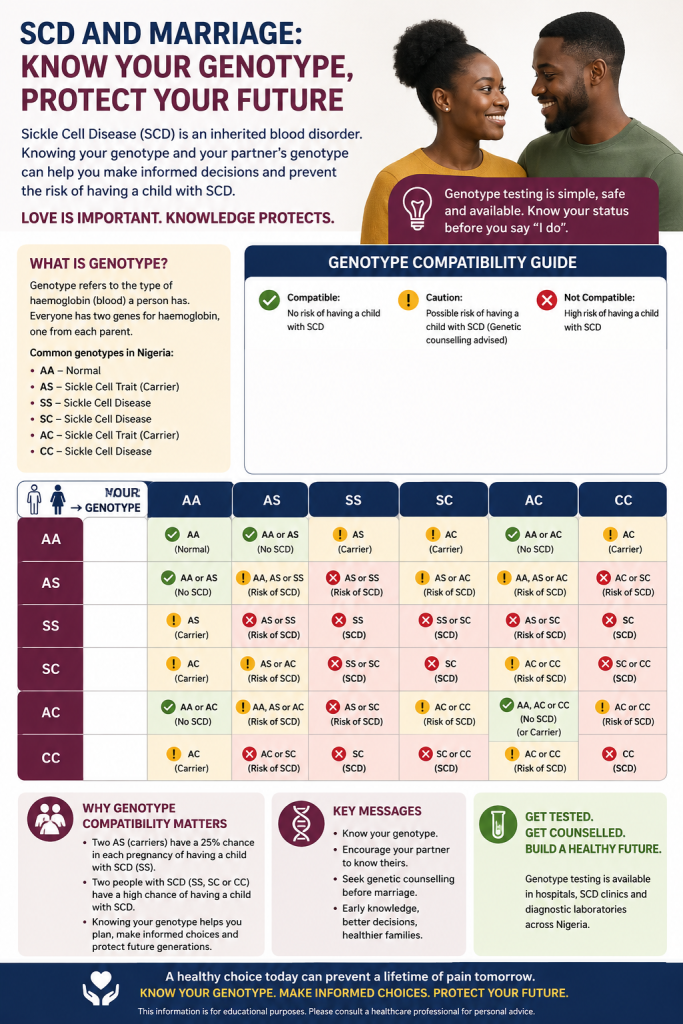
Genotype awareness remains one of the most effective strategies for reducing the burden of sickle cell disease in Nigeria.[1,3] Health experts recommend that individuals know their genotype status early; ideally before entering a serious relationship or making marriage plans.
Sickle cell disease is inherited when a child receives an abnormal haemoglobin gene from both parents. When both partners carry the sickle cell trait (AS), each pregnancy carries a 25% chance of having a child with sickle cell disease (SS), a 50% chance of having a child with the sickle cell trait (AS), and a 25% chance of having a child without the trait (AA).[3]
Certain genotype combinations carry a higher risk of having children with sickle cell disease and should prompt genetic counselling before marriage decisions are made.
Common Genotype Combinations
Lower-risk combinations
- AA + AA
- AA + AS
- AA + AC
Higher-risk combinations that require genetic counselling
- AS + AS
- AS + AC
- AC + AC
- AS + SS
- AS + SC
References
- Obi P. A et. al., Obi Peter Adigwe Impact of Sickle Cell Disease on Affected Individuals in Nigeria: A Critical Review. Int J Gen Med. 2026. https://pmc.ncbi.nlm.nih.gov/articles/PMC10438428/
- GBD 2021 Sickle Cell Disease Collaborators. Global, regional, and national prevalence and mortality burden of sickle cell disease, 2000–2021: a systematic analysis from the Global Burden of Disease Study 2021. The Lancet Haematology. 2023;10(8):e585–e599. https://www.sciencedirect.com/science/article/pii/S2352302623001187
- World Health Organization Regional Office for Africa. Sickle Cell Disease. https://www.afro.who.int/health-topics/sickle-cell-disease
- Galadanci AA, Ibrahim UA, Carroll Y, et al. A Novel Newborn Screening Program for Sickle Cell Disease in Nigeria. International Journal of Neonatal Screening. 2024;10(4):67. doi:10.3390/ijns10040067. https://www.mdpi.com/2409-515X/10/4/67
- Treadwell MJ, Anie KA. Quality of Life in Sickle Cell Disease: What Matters. Hematology/Oncology Clinics of North America. 2022;36(6):1137–1149. https://pubmed.ncbi.nlm.nih.gov/36400535/
- World Health Organization. Global Strategy on Digital Health 2020–2025. https://www.who.int/publications/i/item/9789240020924
- Sickle Cell Foundation Nigeria. https://www.sicklecellfoundation.com/our-story
- Estepp JH, DeBaun MR. The current and future role of hydroxyurea in the treatment of sickle cell anaemia. Blood. 2024;143(1):15–24. https://ashpublications.org/blood/article/143/1/15/498216
- National Health Insurance Authority. https://www.nhia.gov.ng/
- Paediatric Sickle Support Initiative of Nigeria (PSSIN). https://pssin.com/about
- Sickle Cell Aid Foundation. https://www.onescdvoice.com/place/sickle-cell-aid-foundation/