Author: Sarah Daniel
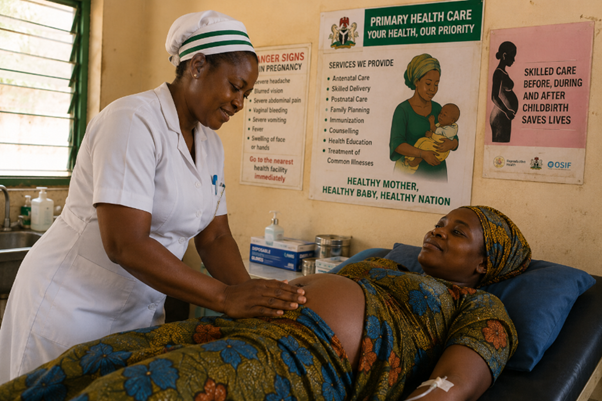
In a small primary healthcare centre (PHC) in northern Nigeria, a midwife begins her shift before sunrise. By noon, she has already attended to women in labour, counselled expectant mothers on nutrition and antenatal care, administered medications, and reassured anxious families worried about complications they cannot afford to treat in tertiary hospitals miles away. By nightfall, she may still be on duty.
This reality reflects the immense burden carried by Nigeria’s frontline maternal health workforce. Nigeria continues to face one of the world’s highest maternal mortality burdens, with persistent shortages of skilled health workers, inequities in healthcare2 access, and strained primary healthcare systems contributing to preventable maternal deaths. Nigeria’s health sector has also faced increasing pressure from shortages of skilled midwives and nurses, migration of health professionals, and underfunding of healthcare infrastructure.2
Recent policy and workforce analysis further show that shortages of skilled midwives remain a major challenge affecting maternal outcomes across the country.5
For many women across Nigeria, especially in rural and underserved communities, the midwife is not just a healthcare worker; she is often the difference between life and death.
Nigeria’s Maternal Health Crisis
Nigeria continues to carry one of the world’s heaviest burdens of maternal mortality. According to recent United Nations and WHO-backed estimates, Nigeria accounted for approximately 75,000 maternal deaths in 2023;5 nearly one-third of global maternal deaths recorded that year5. Women in conflict-affected and underserved regions are disproportionately affected due to poor access to skilled care, weak health infrastructure, poverty, and transportation barriers.
The situation is particularly alarming in northern and rural communities where many women still deliver outside formal health facilities. In some areas, expectant mothers travel long distances to reach healthcare centres, only to encounter overcrowded facilities with limited equipment and too few trained personnel.
Yet amid these challenges, midwives remain central to Nigeria’s maternal and newborn care response.
Midwives: The Backbone of Maternal Care
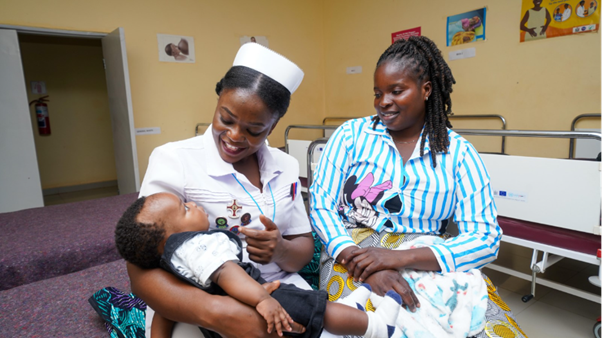
Globally, midwives are recognised as essential healthcare providers capable of delivering most routine maternal and newborn health services. The United Nations Population Fund (UNFPA), the World Health Organization (WHO), and the International Confederation of Midwives estimate that fully trained and supported midwives can deliver about 90 per cent of essential sexual, reproductive, maternal, newborn, and adolescent health services
However, the global shortage of midwives remains staggering. The State of the World’s Midwifery report estimates a shortage of approximately 900,000 midwives worldwide, with Africa carrying the greatest burden3.
Nigeria reflects this broader continental crisis.
Across the country, many midwives work under difficult conditions; managing excessive patient loads, responding to emergencies with limited supplies, and serving communities where healthcare infrastructure is weak or absent. In some primary healthcare facilities, one or two midwives may cater to entire communities.
Despite this pressure, they continue to provide antenatal care, skilled birth attendance, postpartum support, family planning services, immunisation counselling, and health education.
Malaria in Pregnancy: An Additional Burden
Nigeria’s maternal health crisis is further complicated by malaria, which continues to threaten pregnant women and newborns.
The WHO World Malaria Report 2025, using 2024 data, noted that the African region still carries the overwhelming share of the global malaria burden1. Malaria during pregnancy significantly increases the risk of maternal anaemia, miscarriage, stillbirth, premature delivery, and low birth weight.
For Nigerian midwives, malaria prevention and treatment have become routine components of maternal healthcare.
At antenatal clinics, midwives educate pregnant women on sleeping under insecticide-treated nets, ensuring adherence to intermittent preventive treatment in pregnancy (IPTp), recognising symptoms early, and seeking prompt care. In communities with weak access to physicians, midwives often become the first and most trusted source of health information.
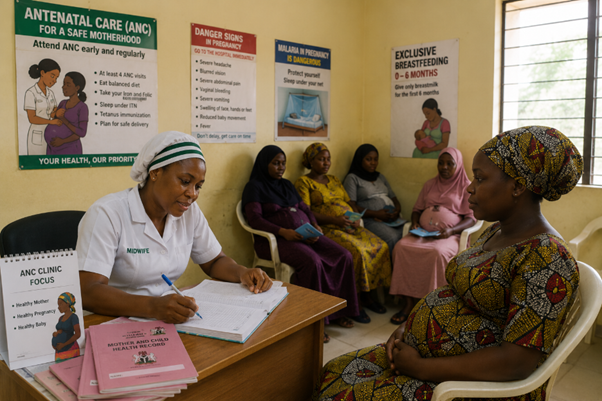
This expanded role demonstrates how maternal healthcare and infectious disease control are deeply interconnected in Nigeria.7
Rural Communities and the Trust Factor
In many Nigerian communities, midwives bridge not only healthcare gaps but also cultural and social barriers.
Where mistrust of formal healthcare systems exists, midwives often serve as trusted community figures who understand local languages, customs, and realities. Their relationship with mothers extends beyond childbirth into nutrition counselling, child health monitoring, breastfeeding support, and family health education.
This trust is especially important in communities where traditional birth attendants still play significant roles7. Increasingly, healthcare stakeholders are recognising the importance of collaboration and training between skilled health workers and traditional birth attendants to improve referrals and reduce preventable maternal deaths.
The Workforce Under Pressure
Nigeria’s health sector continues to face a severe workforce strain driven by poor remuneration, burnout, migration of health professionals, insecurity, and inadequate investments in healthcare systems.
Many trained nurses and midwives leave the country in search of better opportunities abroad, worsening shortages at home; a trend that has increasingly strained healthcare delivery systems across the country6. Those who remain often work extended hours with limited equipment and inconsistent support.
Humanitarian and donor funding cuts in some fragile regions have placed additional pressure on maternal health services, further exposing the vulnerability of health systems that remain heavily donor-dependent despite the critical need for sustainable domestic financing. In conflict-affected communities, particularly in North-East Nigeria, health facilities already operating under severe resource constraints face an increased risk of service disruption, threatening access to essential maternal and newborn care.2
The consequences are profound: overcrowded maternity wards, delayed emergency care, increased complications during childbirth, and preventable maternal and neonatal deaths.
Investing in Midwives Means Saving Lives
Global evidence consistently shows that strengthening the midwifery workforce is one of the most cost-effective ways to reduce maternal and newborn mortality.
According to UNFPA and WHO estimates, universal access to quality midwife-delivered care could help prevent millions2,3 of maternal and newborn deaths annually.
For Nigeria, this means moving beyond rhetoric and making sustained investments in:
- Midwifery education and training
- Recruitment and retention of skilled health workers
- Improved remuneration and working conditions
- Rural deployment incentives
- Functional primary healthcare systems
- Emergency obstetric care infrastructure
- Supply chains for essential medicines and malaria prevention tools
It also means recognising midwives not merely as support staff but as indispensable healthcare leaders.
A System Sustained by Commitment
Despite the systemic pressures surrounding Nigeria’s healthcare sector, midwives continue to show extraordinary resilience.
They work through power outages, shortages of medical supplies, insecurity, workforce shortages, and overcrowded facilities. They provide comfort during labour, respond to emergencies, educate families, and advocate for mothers whose voices are often unheard. Nigeria’s health workforce challenges (including shortages of skilled nurses and midwives, inequitable deployment to rural communities, and retention difficulties) continue to place additional strain on frontline maternal healthcare delivery2.
In many parts of Nigeria, maternal healthcare systems are stretched to their limits. Workforce deficits, underfunding, rural infrastructure gaps, and migration of health professionals continue to affect access to quality maternal healthcare services2.
Yet the commitment of midwives continues to hold the line. As Nigeria seeks solutions to its maternal mortality crisis, one truth remains clear: supporting midwives is not optional. It is essential. The Federal Ministry of Health and Social Welfare has itself recognised midwives as indispensable frontline providers, particularly in underserved and rural communities, and has prioritised investments aimed at strengthening midwifery education, workforce capacity, and maternal health outcomes2.
Their work saves mothers.
Their presence saves newborns.
And strengthening the systems around them may determine whether thousands more Nigerian families experience safe childbirth or devastating loss.
References
- World Health Organization (WHO). World Malaria Report 2025 Publication Overview. https://www.who.int/publications/i/9789240117822
- WHO. Nigeria Nursing and Midwifery Reforms. 2025. https://www.afro.who.int/countries/nigeria/news/nigeria-advances-nursing-and-midwifery-reforms-strengthen-health-workforce
- UNFPA East and Southern Africa Regional Office. The State of the World’s Midwifery 2024. https://esaro.unfpa.org/en/publications/state-worlds-midwifery-sowmy-2024
- WHO. Maternal Mortality Estimate. 2025. Maternal mortality
- Federal Ministry of Health and Social Welfare. 2026. https://health.gov.ng/fg-strategies-initiatives-to-enhance-midwifery-maternal-and-new-born-healthcare/
- The Guardian. ‘Difficult choices’: aid cuts threaten effort to reduce maternal deaths in Nigeria. 2025. https://www.theguardian.com/world/2025/may/21/aid-cuts-threaten-effort-reduce-maternal-deaths-nigeria
- The Guardian. Rat soup, snails and oracles: why Nigeria’s traditional midwives still have a vital role to play. https://www.theguardian.com/global-development/article/2024/jul/01/nigeria-lagos-traditional-birth-attendants-women-babies-maternity-care-oracles-churches